A professionally applied ceramic coating lasts 2 to 5 years in Hagerstown, MD, and longer with careful maintenance. A consumer DIY kit lasts 12 to 24 months. A spray sealant lasts 3 to 6 months. A traditional carnauba wax lasts 4 to 8 weeks. The difference comes down to chemistry, surface preparation, and how the vehicle gets washed.
That range is accurate, but it hides the question most drivers are really asking. Almost every time someone tells us their coating stopped working, the car in front of us still has a working coating on it. What changed is one part of the coating, not all of it. We handle
ceramic coating in Hagerstown, MD every week, and this is the part nobody explains at the counter.

The Short Answer: 2 to 5 Years for a Professionally Applied Coating
The word ceramic appears on labels that behave nothing alike. Here is how the categories separate:
- Professional ceramic coating: 2 to 5 years, or longer with proper care
- Consumer DIY ceramic kit: 12 to 24 months
- SiO2 spray sealant or ceramic booster: 3 to 6 months
- Ceramic-infused hybrid wax: 2 to 6 months
- Traditional carnauba wax: 4 to 8 weeks
Two cars can leave the same shop on the same day with the same coating and finish years apart. The coating is only one of three variables. The others are what happened to the paint before the bottle was opened, and the next 24 months of washing.
A Ceramic Coating Runs Three Clocks, Not One
This is the piece that changes how the 2 to 5 year number reads. A ceramic coating does not have one lifespan. It has three, and they do not expire together. Understanding that is the difference between recoating a car that needs it and recoating a car that does not.
The Hydrophobic Clock Runs Out First
Water beading is the property you notice, and it is also the property that fades earliest. The tight beads that rolled off the hood on day one flatten out and start to cling. Owners read this as failure because it is the only part of the coating they can see working. In reality, reduced beading often means the coating's surface is loaded with road film, iron fallout, and mineral deposits rather than gone.
The Gloss Clock Runs Longer
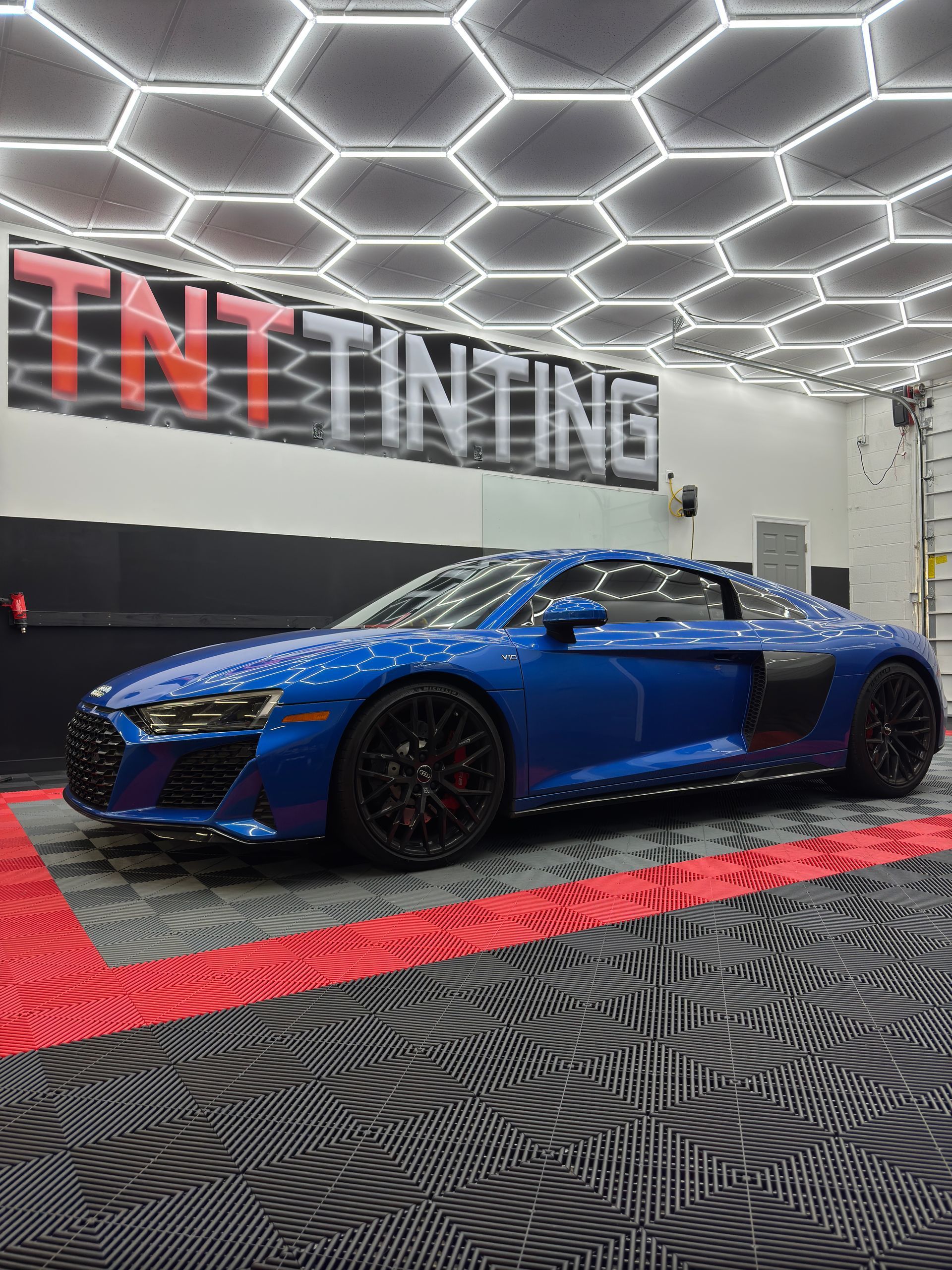
Gloss and slickness outlast beading. The glass-like layer keeps enhancing depth and reflectivity well after the water behavior has softened, so a car that no longer beads sharply can still look considerably better than an uncoated one beside it. You can see the difference across our recent work.
The Protection Clock Runs Longest
The sacrificial barrier over your clear coat is the last clock to stop. It is still absorbing UV exposure, still keeping bird droppings and bug residue from etching directly into the paint, and still making contaminants easier to remove. This clock is the one you actually paid for, and it is running long after the first two have quieted down.
What 9H Hardness Actually Measures, and What It Does Not
You will see 9H on nearly every coating sold. It is worth knowing what the number means before it influences what you spend.
The 9H figure comes from the pencil hardness test, standardized as ASTM D3363, Standard Test Method for Film Hardness by Pencil Test. Graphite pencils of increasing hardness are pushed across a cured film at a fixed angle until one gouges it. The hardest pencil that does not leave a mark becomes the rating.
On the standard drawing pencil scale, 9H is the hardest grade available, which makes 9H the ceiling of the test rather than a superlative.
Three things follow from that. The scale is pencil grades, not the Mohs mineral scale, so a 9H coating is nowhere near the hardness of glass or diamond. The test is run on a freshly cured film, frequently on a flat lab panel rather than a car body. And the result says nothing at all about how many years the coating survives. Hardness and durability are separate measurements, and no coating is scratch-proof.

What Shortens a Ceramic Coating in the Hagerstown Area
- Automatic brush washes. Spinning bristles act like fine sandpaper. Touchless bays trade the brushes for high-alkaline chemistry, which strips hydrophobic performance instead.
- Highway mileage. I-81 and I-70 cross in Washington County, and sustained highway driving means constant grit, bug residue and road film at speed.
- Outdoor parking. UV exposure breaks down any organic or hybrid film over time. If the vehicle lives outside, window tinting protects the interior on the same principle a coating protects the paint.
- Skipped decontamination. A coating applied over embedded iron and industrial fallout never bonds properly. It fails early, and it is not the coating's fault.
Harsh soaps. Dish detergent and heavy degreasers pull the surface properties off faster than winter does.
Why Washington County Winters Are Harder on Coatings Than Most
Hagerstown drivers face a wear mechanism that national articles never mention, because the authors are writing from somewhere else.
The Maryland Department of Transportation State Highway Administration treats state roads with salt brine, a liquid solution of 22 percent salt and 78 percent water, applied before, during and after winter storms. SHA operates a salt brine machine at its Hagerstown Maintenance Facility right here in Washington County. Brine is used because it works, and it works because it stays put.
That is exactly what makes it hard on paint. Rock salt bounces and scatters off the roadway. Brine does not. It films across every surface it touches and sits there, which means a Hagerstown daily driver in February carries a thin salt solution on its lower panels, rockers and wheel wells for days at a time. This is the single biggest reason a commuter car here lands at the lower end of the 2 to 5 year range while a garage-kept weekend car lands at the top of it.
Warranty Term and Lifespan Are Two Different Promises
These get compared as though they measure the same thing. They do not.
A lifespan is a physical outcome. A warranty term is a service agreement with conditions attached. Our coating packages carry stated warranty terms that scale with the work involved: the Pro package includes a 3-year warranty, and both the Master and TNT packages include a 5-year warranty. Those terms sit alongside specific coverage details, so the practical answer is to ask us directly what a given package covers before you compare it to anything else.
When you see a competing lifetime claim, the useful question is not how long, but who inspects it, on what schedule, and what voids it. A shorter term with clear conditions is worth more than an open-ended promise with none.
The First Two Weeks Decide the Next Three Years
Most articles treat maintenance as one flat habit spread evenly across the coating's life. The window that actually sets the trajectory is the stretch immediately after pickup, while the coating finishes hardening and settles into the clear coat. Rushing a wash, parking under a sap-heavy tree, or letting bird droppings sit during that period causes damage that the next three years never fully recover from.
That is why our Pro, Master, and TNT packages each include a 2-week maintenance detail. It gets the vehicle back in the shop at the exact moment it matters, before a bad first month becomes a short third year. The TNT package also sends you home with ceramic-safe soap and detailer spray, so the first washes are done with the right chemistry. After that, hand washing with the two-bucket method, pH-neutral shampoo, and periodic exterior detailing carries the coating the rest of the way.
How to Tell Your Coating Is Actually Worn, Not Just Dirty
A coating that has stopped beading is not automatically a coating that has stopped working. Contamination clogs the surface and mimics failure. The practical test is what happens after a proper decontamination wash. If beading and slickness return, the coating was buried, not spent. If the surface still feels rough and water still sheets flat afterward, the layer is genuinely thinning.
Signs worth watching for: water pooling instead of beading, a draggy feel after washing, dirt bonding harder than it used to, and increased water spotting. Bring the vehicle by and we will tell you honestly whether you need a recoat or a decontamination wash.
When a Ceramic Coating Is the Wrong Choice
We install these every week, and there are still situations where we will tell you to spend the money somewhere else.
- You want to stop rock chips. A coating will not do it. It is hard, but it is not thick or flexible enough to absorb a stone at highway speed. That job belongs to paint protection film, and if you commute on I-81 it is the better investment. Our STEK paint protection film options cover the impact zones.
- Your paint needs correction the budget will not cover. A coating locks in whatever is underneath it, swirls included, for its full life. If the finish needs work, paint correction comes first or the coating is a mistake.
- You are selling the car within a year. A thorough full interior and exterior detailing will present the vehicle just as well for a fraction of the cost.
- Your real complaint is the interior. Sun-faded seats and a worn dash are not a paint problem. An interior coating or interior detail is the fix.
Protect Your Paint Through Another Hagerstown Winter
TNT Tinting & Autostyling is a family-owned auto styling center founded in 2022 in Hagerstown, MD. We are certified installers in ceramic coating, window tinting, and paint protection film, and we were voted Best of the Tristate in both 2024 and 2025. We treat a Civic the same way we treat a 911. You can read what our customers say in our customer reviews.
If your coating has stopped beading, or you are weighing a coating before the brine trucks roll out again, we will look at the vehicle and give you a straight answer about what it actually needs. Call (301) 991-0650 or get a free quote.
Frequently Asked Questions