Protect the Tint You Already Paid For
Good window film does not ask much of you. It does not need waxing, polishing, or a special routine. What it does need is the right cleaner, the right cloth, and a little patience in the first couple of days after installation. Get those wrong and you can put scratches, haze, or lifted edges into film that would otherwise have looked sharp for years.
Knowing how to maintain window tinting in Hagerstown, MD also means paying attention to what our weather does across the year. Summer heat bakes parked cars on National Pike. Cold mornings slow down the curing process. Winter road treatment throws salt spray across your glass, and spring drops a layer of pollen on everything. None of that ruins tint on its own, but it changes how you should clean it.
Here is what we tell our own customers when they pick up their vehicles.
Quick Answer
To maintain window tinting in Hagerstown, use an ammonia-free glass cleaner, wipe with a clean microfiber cloth, avoid abrasive tools, and follow the curing instructions your installer gives you. Check the film now and then for peeling, scratches, lasting bubbles, or discoloration, and have it looked at professionally before you try to fix damaged tint yourself.
Follow Your Installer's Instructions During the Curing Period
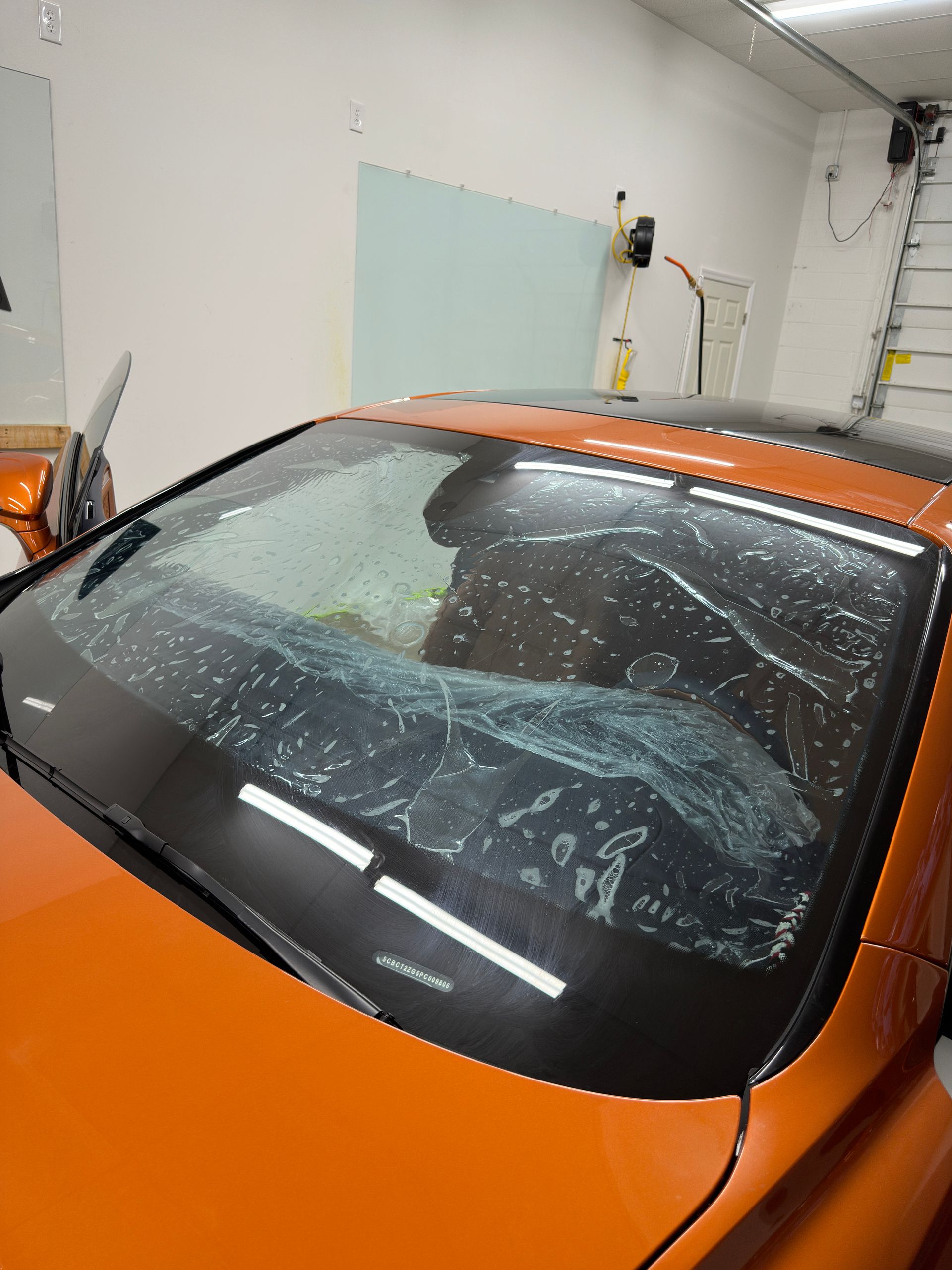
Window film is applied wet. A thin layer of moisture stays between the film and the glass after installation, and it needs time to work its way out before the adhesive fully bonds. Until that happens, the film can shift, crease, or lift if you disturb it.
During that window, a few things are normal:
- Slight haziness or a cloudy look through the glass
- Small water pockets that shrink and disappear on their own
- A faintly uneven appearance that evens out as the film dries
What you should not do is help it along. Pressing on the film, squeegeeing it yourself, or cleaning the inside of the glass during this period can leave permanent marks. Cooler temperatures also slow drying, so film installed in November may take noticeably longer to clear than film installed in July.
One important note about roll-down timing. You will see all sorts of numbers online, from two days to a week. Our standard guidance is to leave your windows up for about 48 hours. If you added our Express Roll Down service, you can roll them down as soon as you leave the shop. That is exactly why we do not want you following a generic rule you read somewhere else. Follow the instructions we give you at pickup for the film and service on your vehicle.
How to Clean Tinted Car Windows Safely
Aftermarket film sits on the inside surface of your glass. That means the interior side is the one that needs care, and the exterior side can be washed normally.
- Park in the shade or indoors. Cleaner evaporates fast on hot glass and leaves streaks behind.
- Dry-dust first with a clean microfiber cloth. Loose grit is what scratches film, not the cleaner.
- Spray the cloth, not the glass. This keeps liquid from running down into the door panel and pooling around the film edges.
- Wipe in straight, overlapping passes. Circles push contamination around instead of lifting it.
- Dry with a second clean microfiber cloth.
- Ease off near the edges. The perimeter of the film is where lifting starts, so use light pressure within an inch or so of the border.
That is the whole routine. It takes a few minutes per vehicle and it is the single biggest factor in how your tint looks three years from now.
Products and Tools to Avoid
Safe to use
- Ammonia-free automotive glass cleaner
- Any cleaner labeled tint-safe
- Clean, soft microfiber towels
- A mild soap and water solution
- Anything we recommend for your specific film
Keep away from your tint
- Ammonia-based household glass cleaners, including most blue-bottle products
- Paper towels, which are more abrasive than they feel
- Sponges, scrub pads, and brushes
- Razor blades and scrapers of any kind
- Solvents, degreasers, and alcohol-heavy cleaners
- Heavy pressure along the film edges
- Suction cups, stickers, and adhesive mounts stuck to tinted glass
Ammonia is the one worth repeating. It breaks down film adhesive over time, and the damage shows up as discoloration and lifting long after the bottle is empty.
Seasonal Window Tint Care for Hagerstown Drivers
Spring pollen and dust
Never wipe a dusty window with a dry cloth. That is dragging abrasive material across the film under pressure. Lift the loose material first, either with a light mist and a fresh microfiber or with a soft dusting pass, then clean normally. Wash your microfiber towels separately and skip the fabric softener, which leaves a residue that smears.
Summer heat and sun
Park in a garage or under cover when you can, use a windshield sunshade, and let the glass cool before cleaning it. Worth clearing up a common assumption: darker film does not automatically mean cooler. Heat rejection comes from what the film is made of, not how dark it looks, which is why a light ceramic film can outperform a much darker carbon film.
Fall leaves, sap, and organic residue
Tree sap, bird droppings, and leaf residue harden fast and get harder to remove the longer they sit. Deal with them early. If something has already baked on to the interior side of the glass, do not reach for a blade. Ask us before using any stronger spot cleaner, because the wrong product can haze the film in seconds.
Winter road spray and cold weather
Maryland treats its roads with rock salt and salt brine through the winter, and Washington County roads get their share. Most of that lands on the exterior glass, where your film is not, so regular exterior washing handles it. What matters on the inside is keeping cleaner and dirty water from running down into the window seals and sitting there. Spray the cloth, wipe, and dry.
Cold weather also stretches out curing time. If we tint your vehicle in January, expect the film to take longer to clear than it would in summer, and give it the extra time before you judge the result.
How Often Should You Clean and Inspect Window Tint?
There is no fixed schedule worth following, and anyone who gives you one is guessing. Clean the interior glass when you can see fingerprints, film haze, or residue, which for most drivers means every few weeks. Over-cleaning does more harm than under-cleaning.
Build a quick inspection into whatever car washing you already do:
- Look along the top edge of each window when it is rolled down
- Check the corners and perimeter for any lifting
- On the rear glass, look closely around the defroster lines, where problems tend to show first
- Note any change in color or clarity compared to the other windows
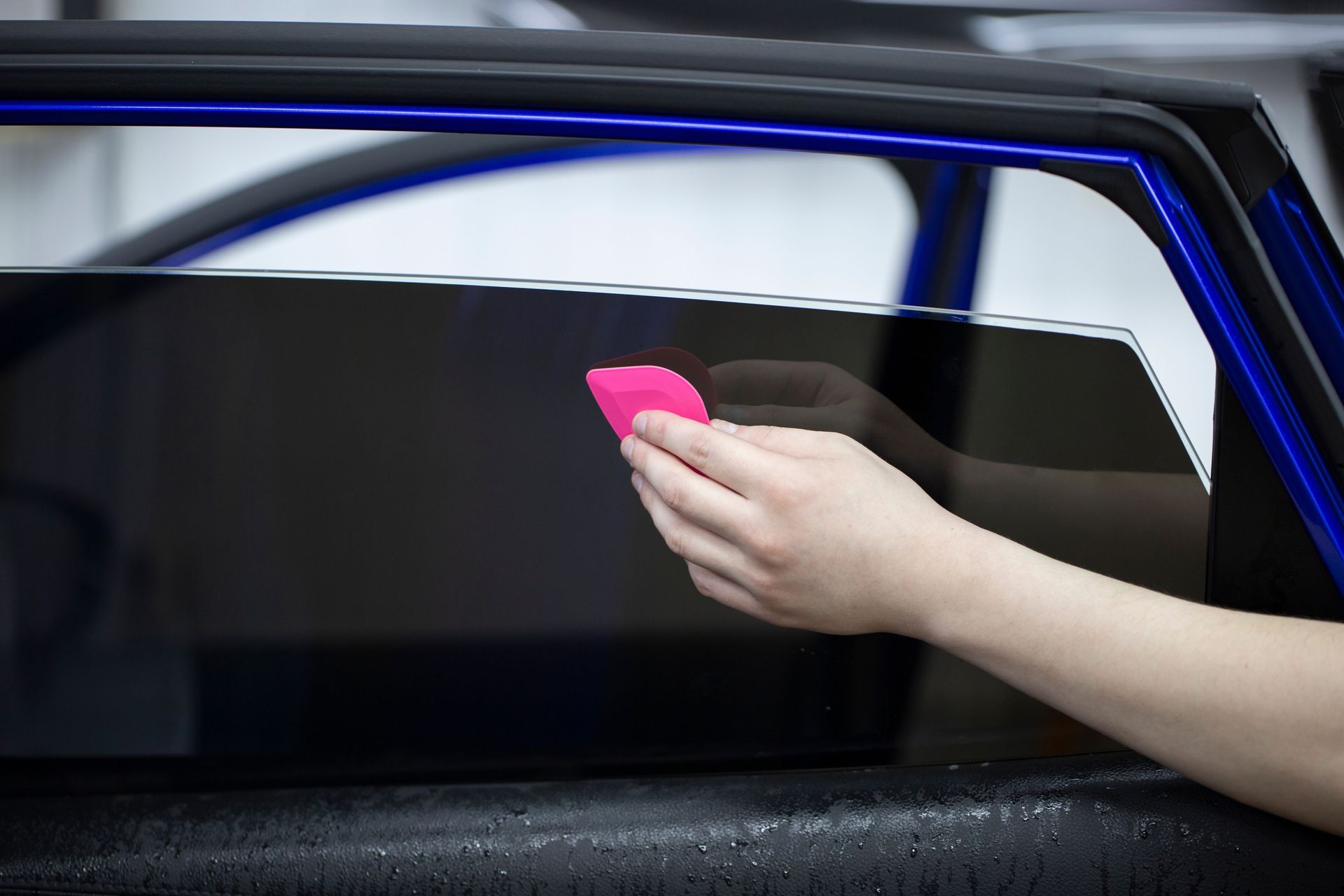

Signs Your Window Tint Needs Professional Attention
Bubbles that stay. Small water pockets during curing are normal. Bubbles still there after the film has fully dried are not, and they usually point to contamination under the film or adhesive failure. Do not puncture them or push them out. Have them inspected.
Peeling or lifting edges. Once an edge lifts, pulling at it, trimming it, or gluing it down makes the repair harder and can turn a small fix into a full replacement.
Purple or uneven color. Purpling is a sign the film's dye layer has broken down. There is no cleaning or treatment that reverses it, and the film needs replacing.
Scratches and cuts. A scratch in film is not like a scratch on bare glass. It cannot be polished out, because polishing removes material and the film is only a few thousandths of an inch thick.
Haze or distortion that will not clean up. Clean the glass properly one time using the method above. If the haze is still there, it is in the film rather than on it.
Does Carbon or Ceramic Tint Need Different Care?
No. The maintenance routine is the same across every film we install, from our carbon packages to ceramic hybrid to full ceramic.
Better film buys you longer color stability and stronger heat rejection. It does not make ammonia safe, and it does not make paper towels stop scratching.
What does change between products is the warranty coverage attached to them, so hang on to the paperwork from your installation and check it before you assume a defect is or is not covered.
When to Contact Us
Get in touch if you notice any of the following, or if you are just not sure whether what you are seeing is a problem:
- Bubbles that have not cleared after the film has fully dried
- Edges lifting or peeling anywhere on the vehicle
- Film that has turned purple, cloudy, or distorted
- Scratches or cuts in the film
- Old tint you want removed, whether for a state inspection, a body shop repair, or a fresh install
- Questions about what your warranty covers
We handle professional tint removal with no adhesive residue left behind, and we install carbon, ceramic hybrid, and full ceramic film at our Hagerstown shop.
If your current tint has run its course, replacing it is often a better value than living with film that is fighting you.
Have a question about caring for your tint, or noticed something that does not look right? Call our Hagerstown team at (301) 991-0650 or request a free quote from TNT Tinting & Autostyling.
Frequently Asked Questions
How long should I wait before rolling down newly tinted windows?
Our standard guidance is about 48 hours. If you added our Express Roll Down service, you can roll them down right away. Because the answer depends on the film and the service on your vehicle, follow the instructions we give you at pickup rather than a general rule from another site.
Can I use Windex on tinted car windows?
Not the ammonia-based formulas. Ammonia breaks down window film adhesive and can cause discoloration and lifting over time. Use an ammonia-free automotive glass cleaner or a cleaner labeled tint-safe, and check the ingredients rather than trusting the front of the bottle.
Is it safe to wash my car after window tint installation?
Yes. Film is applied to the inside of the glass, so exterior washing does not affect it. Just avoid cleaning the interior glass while the film is still curing, and keep pressure off the inside surface during that period.
Are small bubbles normal after getting window tint?
Small water pockets are normal while the film cures and usually disappear on their own as moisture works out. Bubbles that are still there once the film has fully dried are not normal and should be inspected. Never try to push them out or puncture them.
Can cold weather make window tint take longer to cure?
Yes. Lower temperatures slow the evaporation of the moisture between the film and the glass, so film installed in a Hagerstown winter often takes longer to clear than film installed in summer. Give it the extra time before judging the result.
How often should tinted windows be cleaned?
Clean the interior glass when you can see fingerprints, haze, or residue, which is every few weeks for most drivers. There is no benefit to a rigid schedule, and frequent aggressive cleaning does more damage than leaving it alone.
Can scratched window tint be repaired?
No. Film is far too thin to polish, so a scratch cannot be buffed out the way a mark on bare glass sometimes can. Depending on how visible it is, the affected window can be stripped and re-tinted.
What causes window tint to peel around the edges?
Usually one of three things: ammonia-based cleaners breaking down the adhesive, repeated hard pressure along the film edges during cleaning, or moisture pooling at the perimeter. Once an edge lifts, it will keep going, so have it looked at early.
Does ceramic window tint need special cleaning products?
No. Ceramic film uses the same care as carbon film, meaning ammonia-free cleaner and clean microfiber towels. Ceramic gives you better heat rejection and color stability, not immunity to bad cleaning habits.
When should old window tint be replaced?
When it has turned purple, gone hazy, started bubbling or peeling, or picked up scratches you notice every time you drive. Removal and re-tinting is a straightforward job and usually the better option once film starts failing.